








Complete 17 min read
CUDA Fundamentals: Tiled Matrix Multiply & Bitonic Sort
Writing real GPU kernels, exploring shared memory tiling, parallel sorting algorithms, and performance optimization on an NVIDIA H100.
Research notes, technical projects, and things I’m learning. For papers and contributions, start with selected research.

Paper-by-paper notes on Anthropic's Transformer Circuits thread: core claims, methods in plain language, and what the evidence does and doesn't show.

What I learned in GPU Hardware and Software (CS 8803).

Writing real GPU kernels, exploring shared memory tiling, parallel sorting algorithms, and performance optimization on an NVIDIA H100.

Building a cycle-level GPU simulator from the inside, implementing GTO and CCWS warp schedulers, modeling compute instruction latencies, and extending to tensor core simulation.

A simple if statement can halve GPU throughput, exploring how static dataflow analysis detects branch divergence by building a def-use chain over a SASS control flow graph.

Writing a FlashAttention CUDA kernel from scratch, tiling the attention matrix to avoid materializing N×N memory, building a KV cache for token generation, and running GPT-2 with custom kernels end-to-end.

What I Learned in Graduate Introduction to Operating Systems (GIOS) - A Retrospective
A project that explores multithreading, sockets, and the basics of operating systems
Exploring Inter-Process Communication and synchronization in C by building a high-performance proxy and cache.
An exploration of remote communication, data consistency, and synchronization in a C++ distributed file system project.
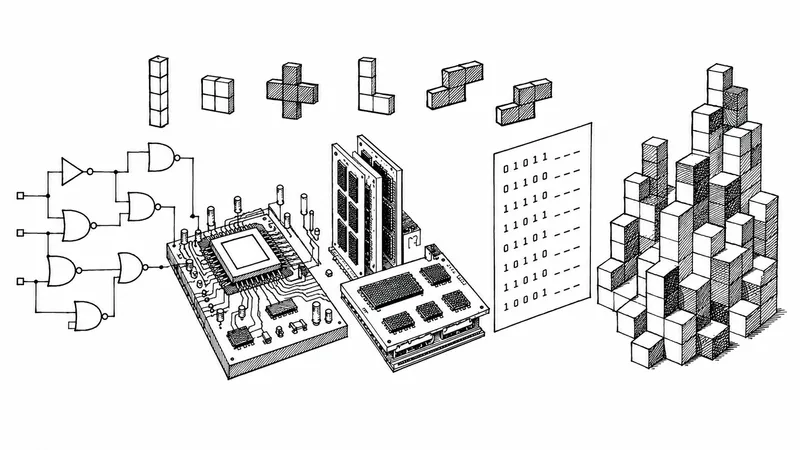
Building a modern computer from first principles — a two-part retrospective on the Nand2Tetris course
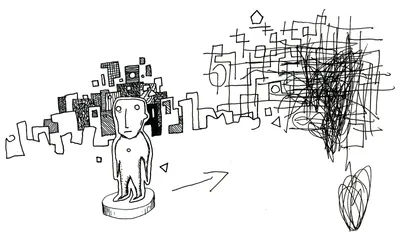
The first half of the Nand2Tetris course: Boolean logic, arithmetic, memory, machine language, CPU architecture, and an assembler. We build the Hack computer up from Nand gates.
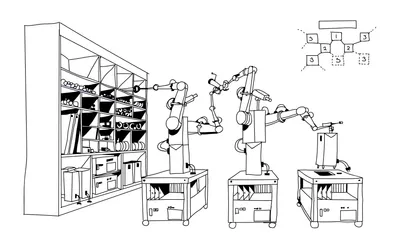
The start of the second half of Nand2Tetris: stack machines, virtual memory segments, and a VM translator that compiles VM bytecode down to Hack assembly.