Master of Science in Computer Science

I completed Georgia Tech’s Master of Science in Computer Science in May 2026. I started the program in Spring 2024 after several years in software engineering, and built my course plan around machine learning and computing systems.
My undergraduate degree is in Biomedical Engineering. Professionally, I ended up in software, working on web applications, backend services, data pipelines, search systems, and developer tooling. I knew how to build production systems, but I wanted a stronger foundation in the models and lower-level systems that increasingly shaped my work.
Seeing the early results from AlphaFold (opens in a new tab) in 2018 was what first pushed me to study machine learning more seriously. Later, as language models became more capable and agentic, my focus shifted toward AI safety: how to evaluate model behavior, understand failure modes, and build the infrastructure needed to run those experiments well.
Coursework
I completed ten courses. The machine learning side covered model training, reinforcement learning, and statistical analysis. The systems side covered operating systems, computer architecture, GPU programming, and performance. I wrote separate retrospectives for many of the courses and projects.
Spring 2024
What I Learned in Graduate Introduction to Operating Systems (GIOS) - A Retrospective
Summer 2024
I took the summer off and traveled through Europe.
Fall 2024
A survey of concepts covered in my graduate Machine Learning course

Spring 2025:
Summer 2025
Fall 2025
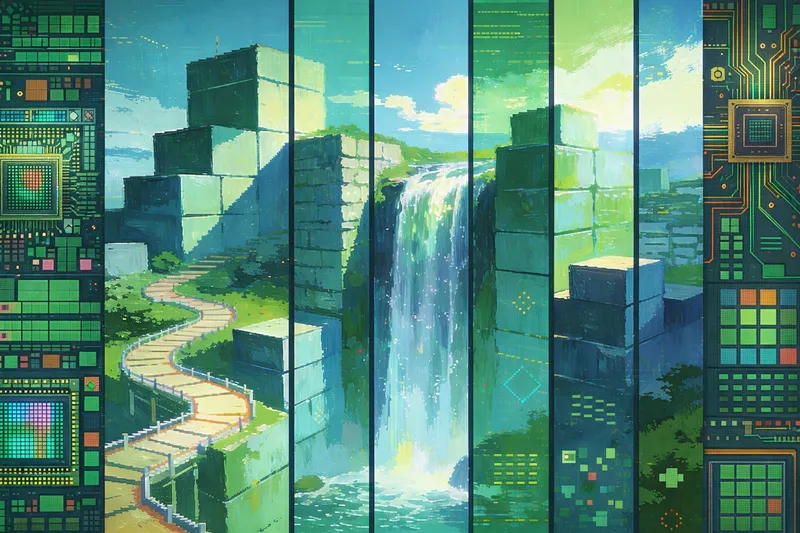
What I learned in GPU Hardware and Software (CS 8803).



- CS 8903: Independent Research. I worked on offline model selection over 84.5 million edX clickstream events. The project became a first-author paper, accepted to the ICML 2026 DEMO Workshop:

A diagnostic study of why learned model selectors fail to recover a large per-instance oracle gap on edX dropout prediction.
Spring 2026
Research alongside the program
The last year of the degree overlapped with several AI safety research programs:
- In Fall 2025, I worked with SPAR (opens in a new tab) on goal drift in long-horizon agents. That project produced three co-authored workshop papers:

Frontier agents resist direct pressure to abandon their goals, but drift when conditioned on flawed trajectories inherited from weaker agents.

Coding agents violate system-prompt constraints more readily when the constraint opposes strongly held trained-in values like security and privacy.

Whether an LLM sees its own prior response changes how it updates on identical new information in medical allocation scenarios.
- In January and February 2026, I completed ARENA 7.0 (opens in a new tab) in London. My capstone used mechanistic interpretability to study how moral fine-tuning changes attention pathways in Gemma-2-2b.

How moral fine-tuning on iterated prisons changes LLMs.
- From December 2025 into 2026, I worked through MARS (opens in a new tab) and then continued on with Redwood Research. Our attack-selection paper showed that selective attacker policies can make agentic control evaluations look substantially less safe than evaluations using naive attackers:

Control evaluations that let the red team choose when to attack produce meaningfully lower safety estimates than evaluations that ignore attack selection.
- In Spring 2026, I returned to SPAR for a project on human-AI complementarity in scalable oversight. I contributed to methods and the FastAPI backend for a participant study run through Prolific.
What I took from it
I went into the program looking for depth in two areas. The ML courses gave me more practice designing experiments, training models, and analyzing where an evaluation breaks down. The systems courses made me work close to the hardware in C, C++, and CUDA, from operating-system projects to GPU simulators and custom attention kernels.
Crosse, Tyler. (Jun 2025). Master of Science in Computer Science. tylercrosse.com. https://tylercrosse.com/ideas/2025/mscs/.
@article{crosse2025master,
  title   = {Master of Science in Computer Science},
  author  = {Crosse, Tyler},
  journal = {tylercrosse.com},
  year    = {2025},
  month   = {Jun},
  url     = {https://tylercrosse.com/ideas/2025/mscs/}
}
Except where otherwise noted, this post is licensed under a Creative Commons International (CC BY 4.0) license.